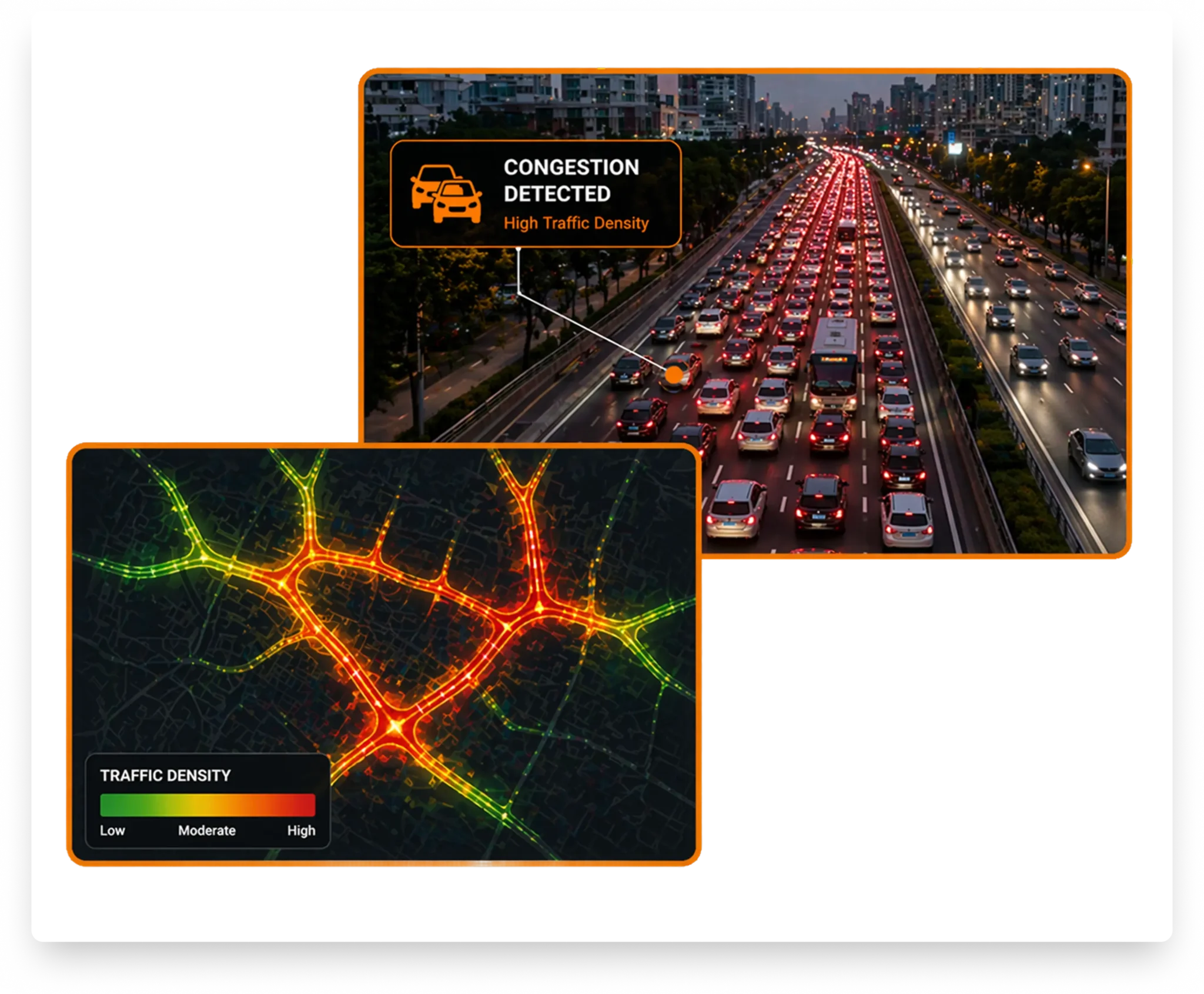


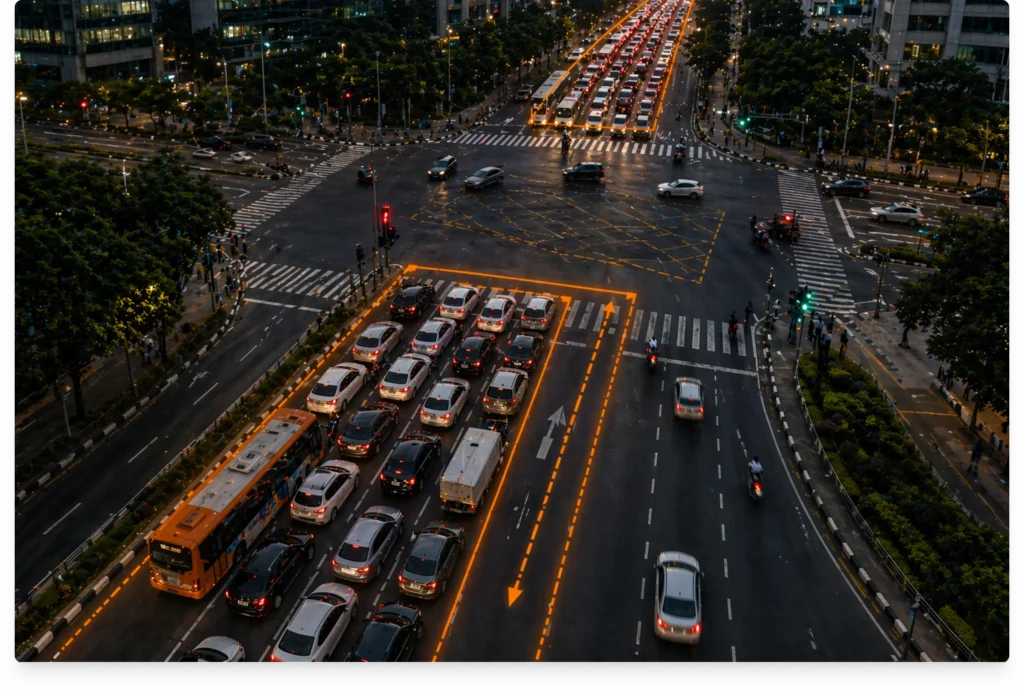
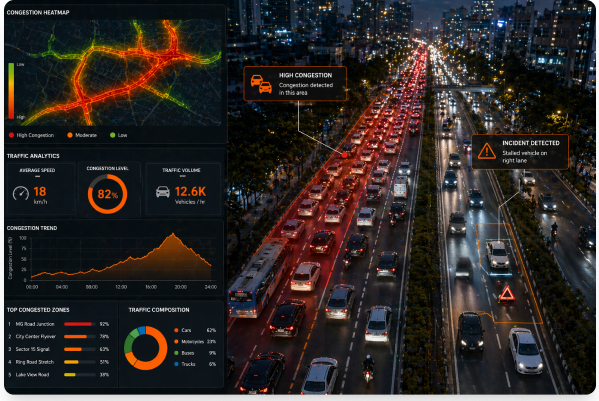
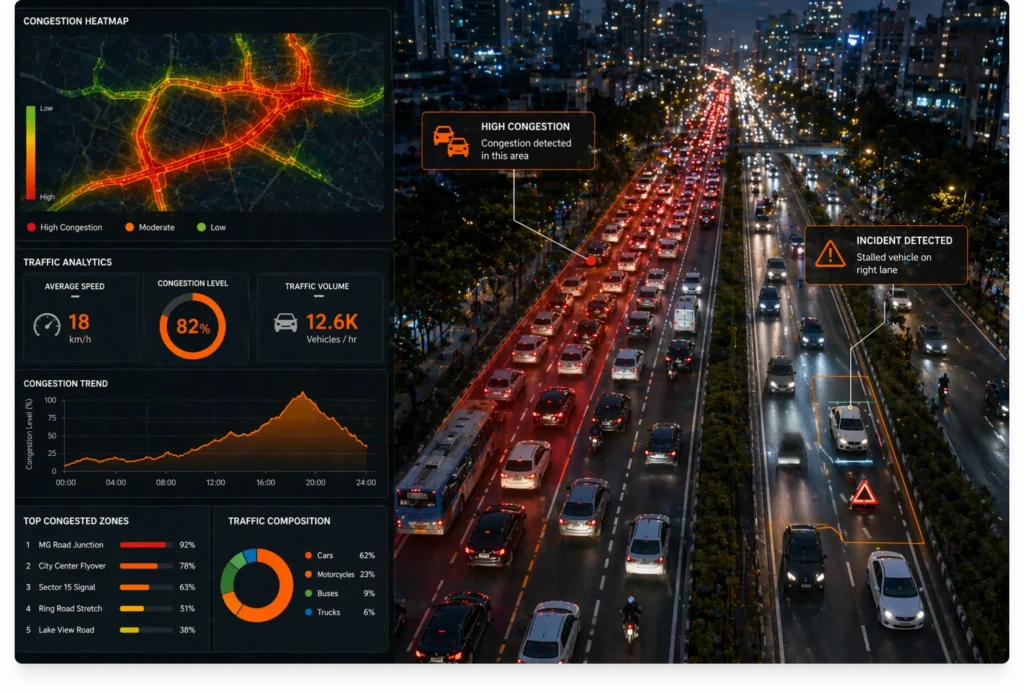
Traffic congestion detection is an AI-powered solution that uses video analytics to monitor and analyse cars’ movements in real time. By processing live CCTV feeds, the system can identify traffic density, queue lengths, bottlenecks, and unusual slowdowns across roads and intersections. This enables traffic authorities and smart city operators to gain instant visibility into congestion patterns and take proactive measures such as adjusting signal timings, rerouting vehicles, or deploying on-ground support to improve traffic flow.
Yes, Intozi’s system for detecting traffic congestion is designed to seamlessly integrate with existing CCTV infrastructure, eliminating the need for costly hardware upgrades. The AI models are deployed on top of current video feeds from cameras, NVRs, or VMS platforms, allowing cities and organisations to leverage their existing investments. This makes deployment faster, more cost-effective, and scalable across multiple locations without disrupting current surveillance systems.
AI-based congestion detection systems are highly accurate; they leverage advanced computer vision algorithms to detect and track vehicles, measure speeds, and analyse traffic patterns under varying conditions. Intozi’s models are specifically optimised for complex traffic environments, such as those in India, where mixed vehicle types and unpredictable movements are common. With continuous learning and real-time data processing, the system maintains high accuracy levels and delivers reliable insights for better traffic management decisions.
Yes, Intozi’s platform is built to integrate smoothly with existing smart city ecosystems, including Integrated Traffic Management Systems (ITMS), command and control centres, and third-party analytics dashboards. Through APIs and a modular architecture, the system enables centralised monitoring, data sharing, and automated decision-making. This ensures that traffic insights are not siloed but become part of a larger intelligent infrastructure for urban mobility and safety.