
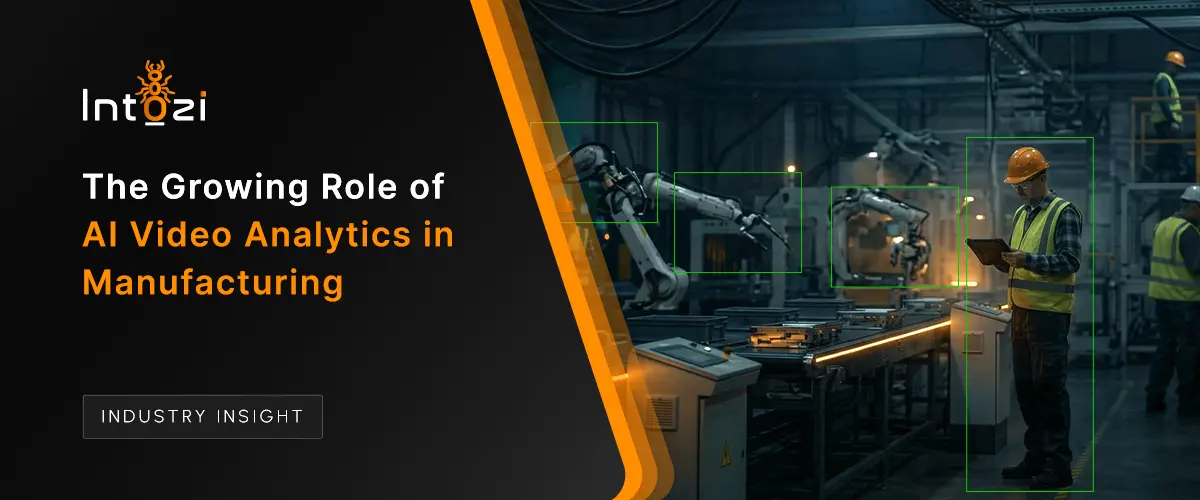
Why Manufacturing AI Video Analytics Creates Alerts—Not Outcomes
Manufacturing companies are investing heavily in artificial intelligence to make their factories smarter, safer, and more efficient. Cameras across production floors now capture huge amounts of visual data, and AI-powered video analytics promises to turn that data into useful insights. But in many factories, the reality looks different. Systems generate alerts, dashboards show activity, yet day-to-day operations remain largely the same. As organisations adopt AI in manufacturing, they often find that insights are visible—but decisions are still made manually.
Factories operate in fast-moving environments where even small delays can impact productivity, quality, or safety. While ai and manufacturing technologies are excellent at detecting events such as safety violations or machine issues, they often stop at reporting them. If those insights are not tied directly to plant workflows or operational actions, they remain observations instead of improvements.
The Growing Role of AI Video Analytics in Manufacturing
Video analytics powered by AI has become an important tool for manufacturers who want better visibility into what is happening on the shop floor. Cameras are already installed in many facilities, and AI makes it possible to analyze those video streams automatically. Instead of relying only on manual supervision, plants can use AI to continuously monitor activities and detect unusual situations.
The rise of ai in manufacturing industry is driven by the need to identify problems faster and respond more effectively. AI systems can observe production environments around the clock and highlight issues that might otherwise go unnoticed.
Manufacturers are increasingly using AI video analytics to support areas such as:
-
Monitoring worker safety and PPE compliance
-
Detecting unusual machine behavior or downtime
-
Supporting visual quality inspections on production lines
-
Tracking production flow and movement on factory floors
-
Identifying bottlenecks or operational slowdowns
These applications show how ai for manufacturing industry can help organizations understand what is happening inside their factories in real time.
The Core Problem: Insights Without Operational Decisions
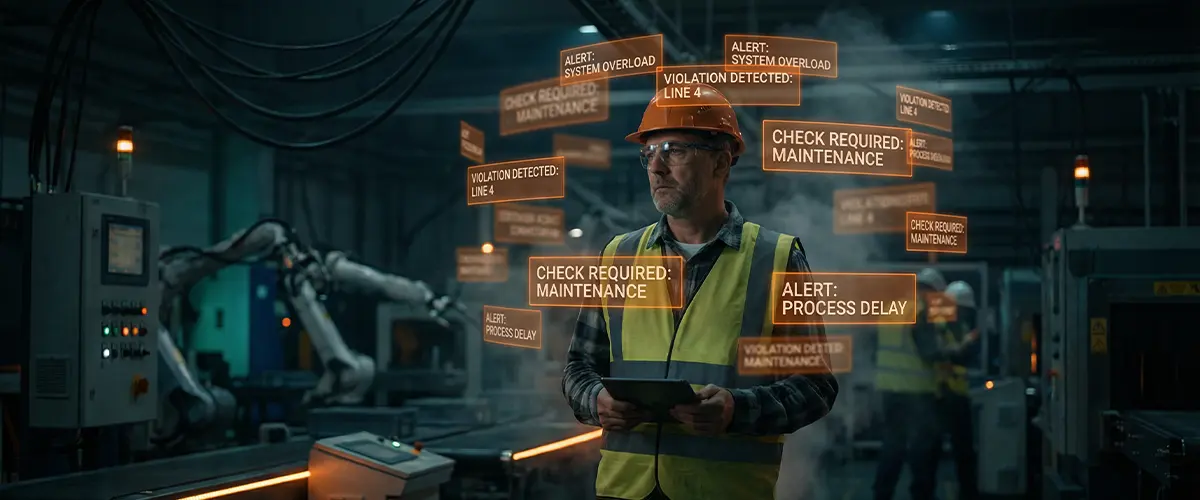
Despite the promise of AI video analytics, many manufacturing companies struggle to turn insights into actual improvements. Most systems are very good at detecting events and sending alerts, but they rarely help teams decide what to do next.
Manufacturing plants depend on quick and consistent decisions to keep production running smoothly. When AI insights appear only on dashboards, supervisors still have to interpret the information and decide how to respond. This slows things down and introduces inconsistency across shifts.
Some common reasons for this gap include:
-
AI tools working separately from plant management systems
-
Alerts requiring manual interpretation by supervisors
-
No clear process for responding to different alerts
-
Different teams reacting differently to the same issue
-
Lack of automated workflows triggered by AI insights
Because of these challenges, many companies using ai in manufacturing and production end up with useful data but limited operational impact.
Alert Fatigue on the Shop Floor
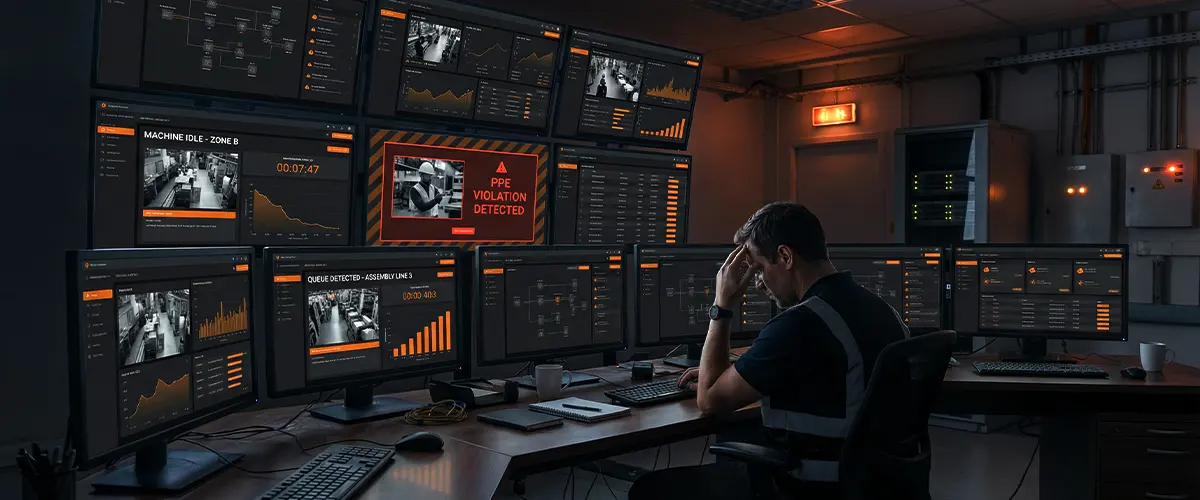
Another challenge that quickly appears in AI-enabled factories is alert fatigue. When workers and supervisors receive too many notifications throughout the day, it becomes difficult to tell which alerts truly matter.
Manufacturing environments are already busy, and supervisors often juggle multiple responsibilities at once. If AI systems continuously generate alerts without context or priority levels, people naturally begin to ignore them.
Alert fatigue typically happens because of:
-
Repeated alerts about the same issue
-
False alarms from AI detection models
-
Alerts that don’t clearly explain what action is needed
-
Multiple systems sending notifications at the same time
-
Notifications about events that are not actually critical
When this happens, the value of ai in manufacturing industry decreases because important insights get lost in the noise.
The Missing Link: Connecting AI Insights to Factory Workflows
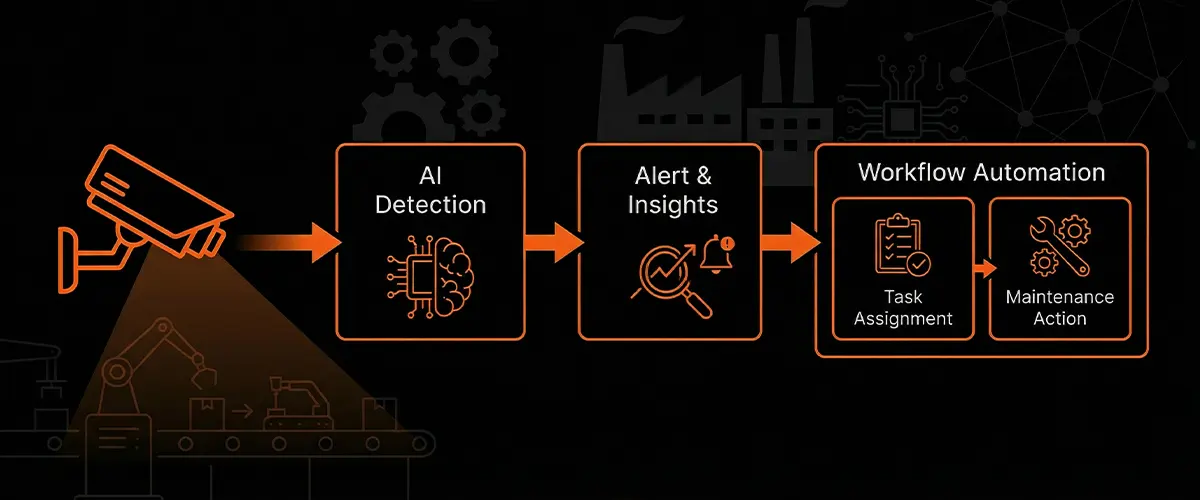
For AI to truly improve manufacturing operations, insights need to lead directly to action. Instead of simply notifying supervisors, AI systems should connect with the workflows that already run the plant.
Factories rely on structured processes—standard operating procedures, escalation rules, and clear responsibilities. When AI analytics becomes part of these processes, alerts can trigger real operational steps instead of waiting for someone to interpret them.
Effective workflow-driven AI systems often include:
-
Integration with plant systems such as MES, ERP, and maintenance tools
-
Automatic escalation for safety or production incidents
-
Alerts prioritized by operational importance
-
Clear ownership of actions and response timelines
-
Feedback loops that improve AI accuracy over time
By embedding analytics into operational workflows, ai and manufacturing can move beyond monitoring and start supporting real decision-making.

How Intozi Helps Manufacturers Turn AI Insights into Action
Many manufacturers find that traditional AI monitoring systems provide visibility but not necessarily action. To truly benefit from AI, companies need solutions that connect insights with day-to-day plant operations.
Intozi focuses on helping manufacturing teams close that gap. Instead of relying only on dashboards, the platform is designed to integrate AI insights directly into the workflows that run a factory.
Intozi helps manufacturers:
-
Use AI-powered video analytics built specifically for manufacturing environments
-
Detect safety risks and operational issues in real time
-
Prioritize alerts based on their impact on production or safety
-
Connect AI insights with MES, ERP, and maintenance systems
-
Automatically escalate incidents to the right people
-
Learn from real plant responses to improve accuracy over time
With this approach, Intozi helps organisations use ai for manufacturing industry not just for monitoring but for improving real operational performance.
Turning AI Insights into Real Manufacturing Results
AI technology is already capable of detecting safety risks, operational issues, and production disruptions. But the real value of AI appears only when those insights lead to action.
Factories that see real benefits from ai in manufacturing focus on connecting analytics with plant workflows rather than relying solely on dashboards. When AI insights trigger clear actions—such as maintenance checks, safety interventions, or production adjustments—operations become faster and more consistent.
This approach allows manufacturers to fully benefit from ai in manufacturing and production, improving efficiency, safety, and reliability across the plant. By adopting workflow-driven platforms like Intozi, factories can move beyond simple alerts and turn AI insights into measurable operational results.
Frequently Asked Questions (FAQs)
Upgrade Your Operations With Next-Generation AI Video Analytics
Intozi Tech Pvt Ltd
Unit no- 629, 644, 645 Tower B2, Spaze I-Tech Park, Sohna Road Sec 49, Gurgaon, Haryana-122018
MON-FRI 09:00 - 20:00, SAT 10:00 - 14:00