
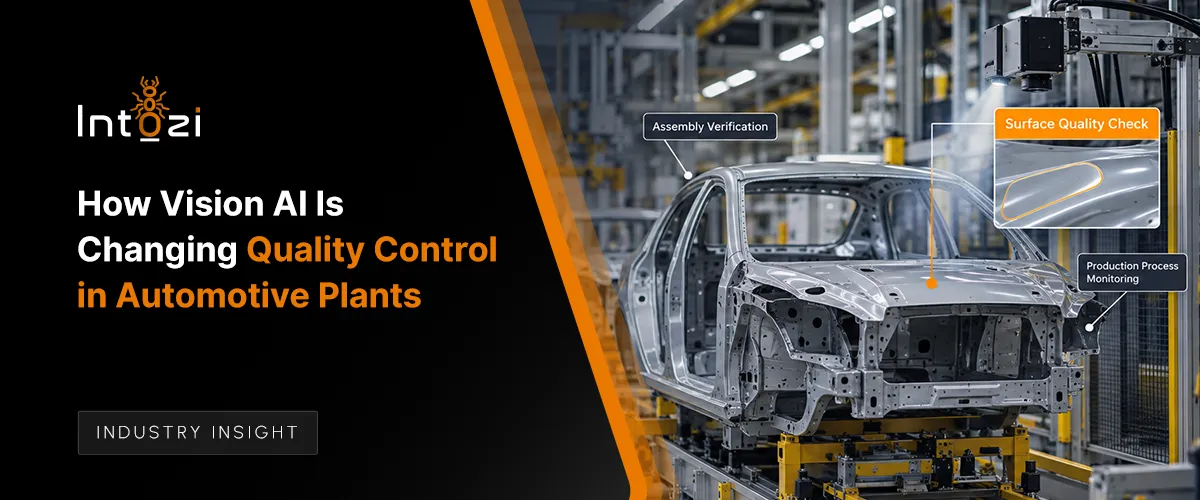
How Vision AI Is Changing Quality Control in Automotive Plants
Automotive plants handle thousands of components and production stages every day, making consistent quality control essential. AI-powered quality & safety solutions for automotive manufacturing can help manufacturers identify defects, monitor production processes, and improve workplace safety through intelligent visual analysis. Instead of depending entirely on manual inspections, AI can continuously analyze production environments and highlight issues that require attention.
The use of AI in automotive industry operations is expanding beyond vehicle design and robotics. Video-based AI is particularly useful here because it builds on cameras plants already have. Rather than using them only to record incidents after the fact, manufacturers can put that footage to work identifying issues in real time.
How Can AI Improve Quality Control in Automotive Manufacturing
Traditional quality inspection relies heavily on repetitive manual checks. While experienced inspectors remain important, examining large quantities of components consistently can become difficult as production volumes increase.
AI-powered computer vision can analyze production footage and identify predefined visual conditions. This provides an additional inspection layer that supports quality teams while reducing the burden of repetitive monitoring.
AI can help with:
- Detecting visible product defects
- Monitoring assembly processes
- Identifying missing components
- Checking product positioning
- Monitoring process compliance
- Identifying abnormal production conditions
How Can AI Detect Defects in Automotive Parts
Automotive components require precision, and small defects can affect quality when they are not identified early. Manual inspection can become challenging when parts move quickly through production lines.
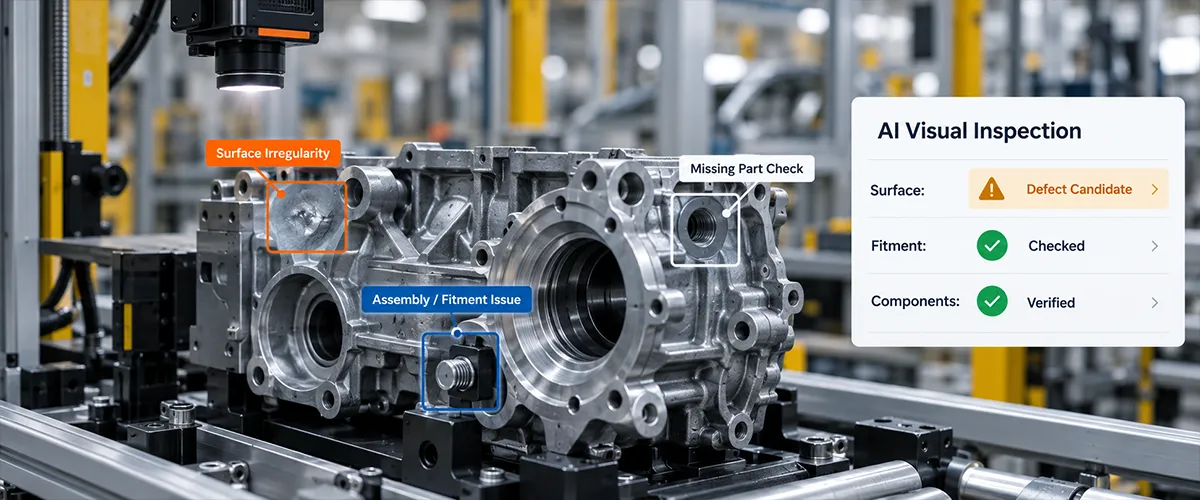
AI video analytics for automotive parts manufacturing can analyse visual information and identify predefined defects or abnormalities. Depending on the application, AI can support the inspection of surface irregularities, incorrect assembly, missing parts, and other visible quality issues.
This creates an automated layer of visual inspection alongside existing quality-control procedures.
How Can AI Reduce Human Error in Quality Inspection
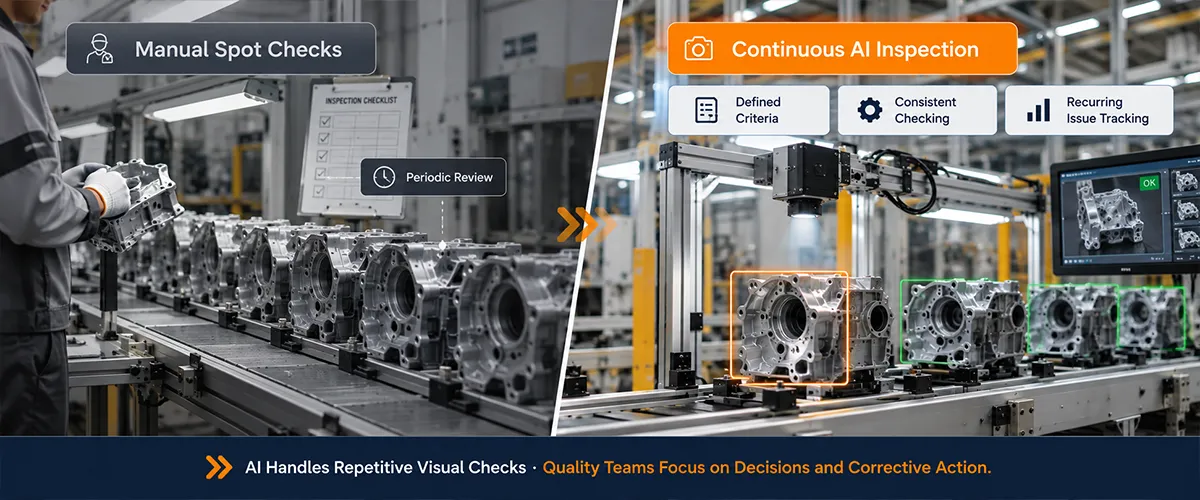
Repetitive inspection tasks can become difficult when employees examine hundreds or thousands of similar components during a shift. Fatigue and differences in human judgement can affect consistency.
AI can provide continuous analysis based on defined inspection criteria. Quality professionals can then focus on complex decisions, investigations, and corrective actions while AI supports repetitive visual checks.
This can improve:
- Inspection consistency
- Defect identification
- Production monitoring
- Quality documentation
- Response to recurring issues
How Can Smart AI Solutions Improve Automotive Manufacturing
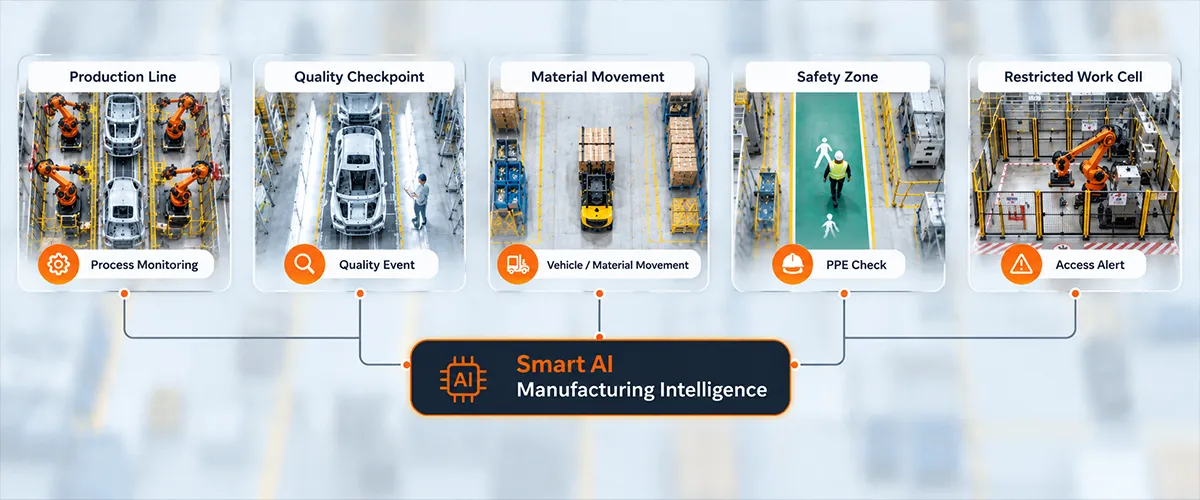
Smart AI solutions for automotive manufacturing can provide intelligent monitoring across different stages of production. By combining computer vision with real-time analysis, manufacturers can gain greater visibility into processes that are difficult to monitor manually. Automotive manufacturing video analytics can turn existing camera infrastructure into a source of operational intelligence, rather than a tool used only to review footage after an incident.
AI can support monitoring of:
- Production activities
- Workplace safety
- Material movement
- Quality-control points
- Restricted areas
- Process compliance
These capabilities can connect quality control with wider manufacturing operations. Applications can be selected according to the requirements of each manufacturing plant.
How Can AI Automation Improve Automotive Parts Manufacturing
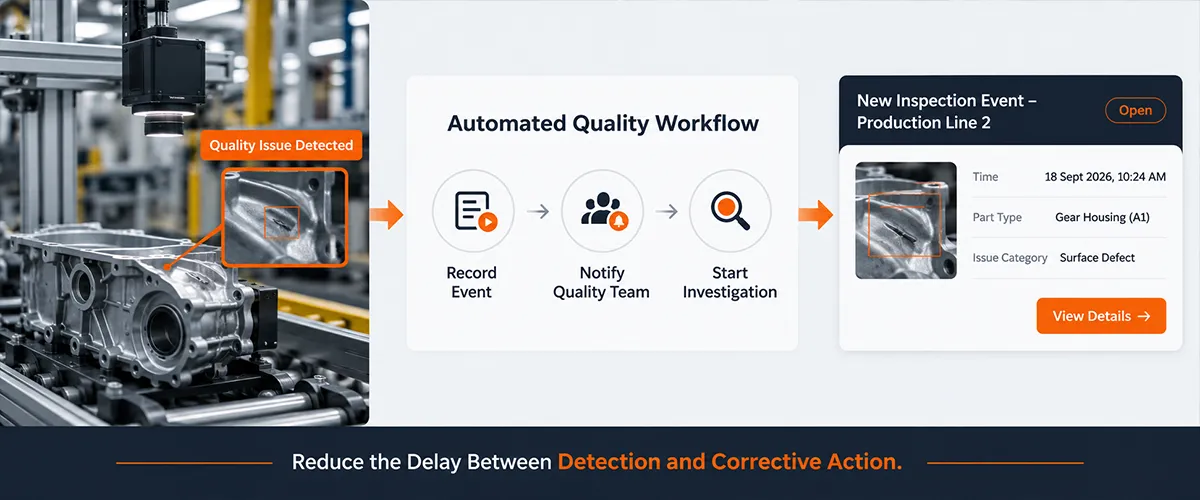
Automotive parts manufacturing includes many repetitive processes where automation can improve consistency and efficiency. AI-powered automation solutions for automotive parts manufacturing can combine computer vision with automated workflows to identify conditions and initiate appropriate actions.
For example, when an AI system detects a predefined quality issue, the event can be recorded and communicated to the relevant team. This can reduce the delay between identifying a problem and beginning an investigation.
How Does Intozi’s Ikshana Support Automotive Quality Control
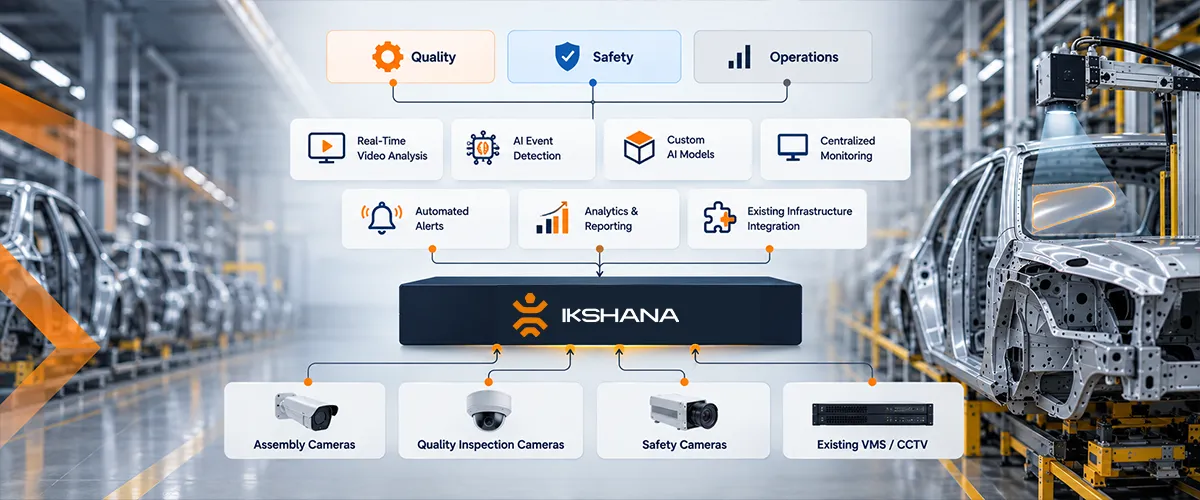
Intozi Ikshana Vision AI Platform is an AI-powered video intelligence platform that helps organizations convert camera feeds into actionable information. In automotive manufacturing, Ikshana can support quality, safety, security, and operational monitoring through AI-powered video analysis.
The platform can deploy AI applications across existing video infrastructure and provide a centralised environment for managing detected events.
Key capabilities include:
- Real-time video analysis
- AI-based event detection
- Custom AI model deployment
- Centralised monitoring
- Automated alerts
- Analytics and reporting
- Integration with existing infrastructure
This enables automotive manufacturers to use existing camera networks as an intelligent monitoring layer. The value isn’t simply detecting more problems – it’s surfacing the right information at the right time so quality and production teams can take appropriate action. With the right implementation, Vision AI can become an important part of modern automotive manufacturing, supporting safer operations, consistent inspections, and data-driven production.
Frequently Asked Questions (FAQs)
AI can improve quality control by continuously analyzing visual information from production environments and identifying predefined defects, missing components, incorrect assembly, or process deviations. It can support repetitive inspection tasks with consistent analysis while allowing quality teams to focus on investigation and decision-making. AI can also provide event-based information that helps manufacturers identify recurring quality issues and improve production processes.
Computer vision analyses images and video captured across manufacturing environments. Depending on the application, it can inspect components, monitor assembly processes, identify defects, track objects, and observe production activities. When combined with AI models, computer vision can recognize specific visual conditions and provide alerts or useful information to manufacturing teams.
AI can detect predefined visual defects when suitable cameras, AI models, data, and processing infrastructure are available. It can be configured to identify characteristics such as surface abnormalities, missing components, incorrect positioning, or assembly issues. Detection performance depends on factors including image quality, lighting, model design, and the specific manufacturing environment.
AI can reduce reliance on repetitive manual visual inspection by consistently analyzing production footage according to defined criteria. This can help reduce variations caused by fatigue or differences in human judgement. However, AI works best as an additional quality-control layer, with experienced personnel continuing to review complex cases and make important manufacturing decisions.
AI video analytics can provide continuous monitoring, faster event detection, consistent visual inspection, improved safety visibility, and operational intelligence. It can analyze existing camera feeds and identify events that require attention. By connecting video information with manufacturing workflows, automotive plants can gain more value from their camera infrastructure while reducing dependence on continuous manual observation.
Intozi’s Ikshana can help automotive manufacturers apply AI-powered video intelligence to quality, safety, security, and operational use cases. It supports real-time analysis, event detection, alerts, reporting, and custom AI model deployment. This can help manufacturers transform existing camera infrastructure into an intelligent monitoring layer that provides actionable information across different areas of the plant.
Upgrade Your Operations With Next-Generation AI Video Analytics
Intozi Tech Pvt Ltd
Unit no- 629, 644, 645 Tower B2, Spaze I-Tech Park, Sohna Road Sec 49, Gurgaon, Haryana-122018
MON-FRI 09:00 - 20:00, SAT 10:00 - 14:00