
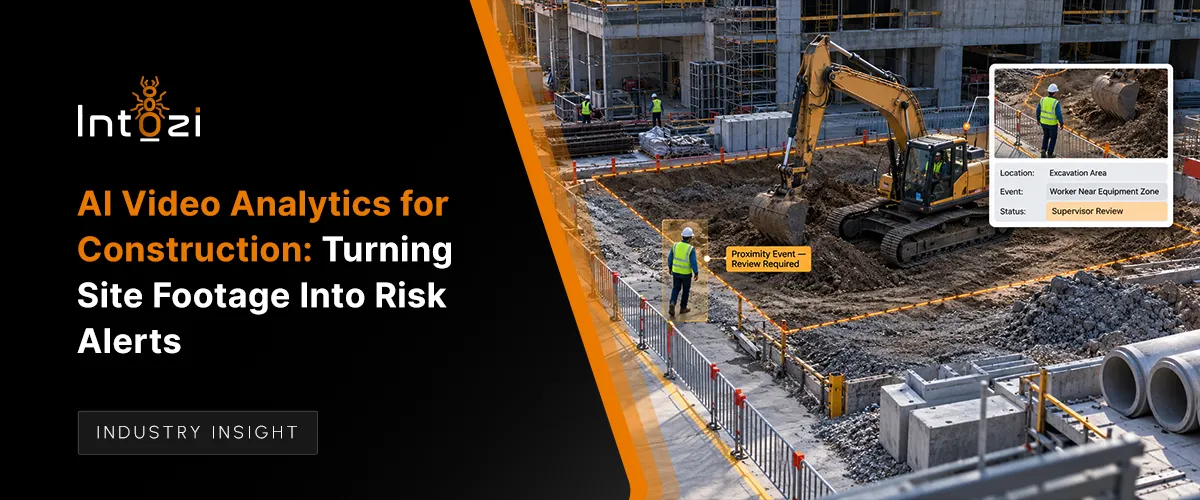
AI Video Analytics for Construction: Turning Site Footage Into Risk Alerts
Construction sites are constantly changing environments where workers, heavy machinery, vehicles, and materials move throughout the day. These activities can create safety, security, and operational risks that are difficult to track through manual observation alone. A traditional construction site surveillance system records activity, but AI video analytics can go further by identifying specific events that require attention.
How AI Video Analytics Identifies Construction Site Risks
AI video analytics for construction uses computer vision to analyze video feeds and recognize predefined activities, movements, and conditions. Depending on the system’s capabilities, it can help identify potential safety violations, unauthorized entry, unsafe movement around machinery, and other site-specific events.
Instead of relying only on reviewing recorded footage after an incident, construction teams can use AI-generated alerts to identify activities that may require investigation. This provides additional visibility into site conditions while work is underway.
What AI Can Identify Across Active Construction Sites
Construction site risks vary depending on the project stage, equipment, workforce, and surrounding environment. AI analytics can be configured to identify certain visual events in designated areas, including:
- People entering restricted or hazardous zones
- Workers entering monitored areas without required safety equipment, where supported
- Unsafe proximity between people and moving machinery
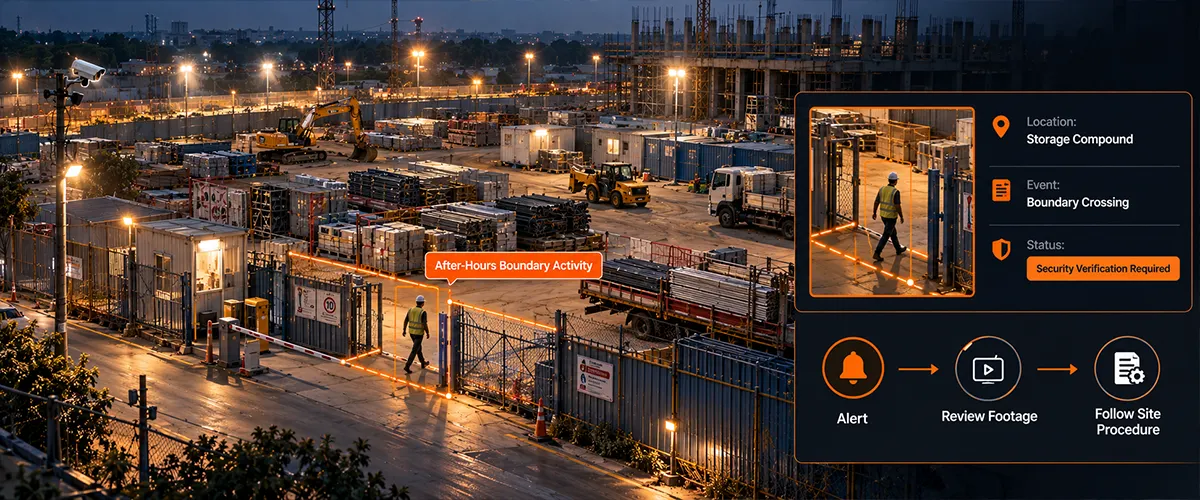
- Unauthorized movement around site boundaries or access points
- Unusual activity around equipment and material storage areas
These capabilities depend on the selected analytics, camera positioning, visibility, and site conditions. Alerts should support established safety procedures rather than replace professional risk assessments or supervision.
How AI-Based Site Monitoring Supports Worker Safety
Construction work can involve working at height, operating heavy machinery, handling materials, and moving through areas with changing hazards. Identifying unsafe conditions early can help teams investigate and take appropriate action.
AI-based site monitoring can support worker safety by flagging configured events, such as entry into restricted zones or potential safety compliance violations. When combined with worker training, toolbox talks, personal protective equipment policies, and regular inspections, this technology can provide additional visibility into activity across the site.
How AI Video Analytics Strengthens Construction Site Security
Construction sites may contain expensive machinery, tools, fuel, and building materials. Unauthorized access or suspicious activity outside working hours can lead to losses, project disruption, and additional security costs.
AI surveillance for construction sites can help security teams monitor designated entrances, perimeters, and restricted areas. Similarly, construction site security solutions enhanced with video analytics can identify defined events and generate alerts for review. Their effectiveness depends on appropriate camera coverage, detection configuration, lighting, and a reliable response process.
How Infrastructure Surveillance Supports Large Projects
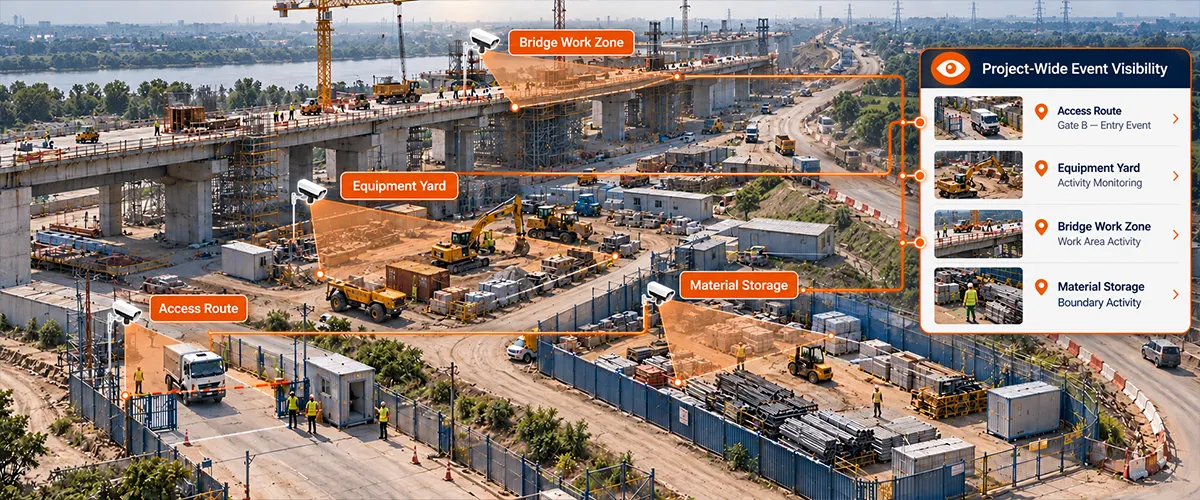
Large infrastructure projects can span extensive areas with multiple contractors, access routes, equipment zones, and temporary workspaces. Monitoring these locations consistently can be difficult when teams depend entirely on manual checks.
Infrastructure surveillance solutions enhanced with AI analytics can help identify activity in designated areas and bring relevant events to the attention of responsible teams. This can support a more consistent monitoring approach across construction projects, transport infrastructure, and other large operational environments.
How AI Video Analytics Fits Into Existing Site Operations
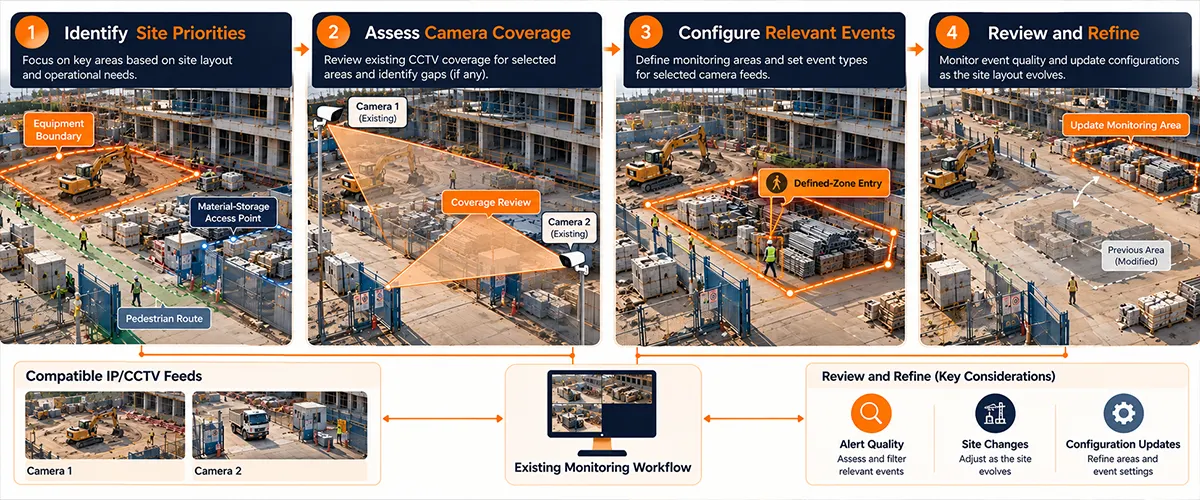
Construction teams do not necessarily need a completely separate monitoring workflow to benefit from AI. Depending on technical compatibility, analytics can use existing IP/CCTV feeds and be configured around the site’s priorities.
A practical deployment begins by identifying key risks, selecting suitable monitoring areas, and defining the events that should generate alerts. Teams can then evaluate alert quality and refine the configuration as site conditions change. This helps keep monitoring aligned with actual operational requirements rather than generating unnecessary notifications.
How Intozi and Ikshana Support Construction Site Intelligence
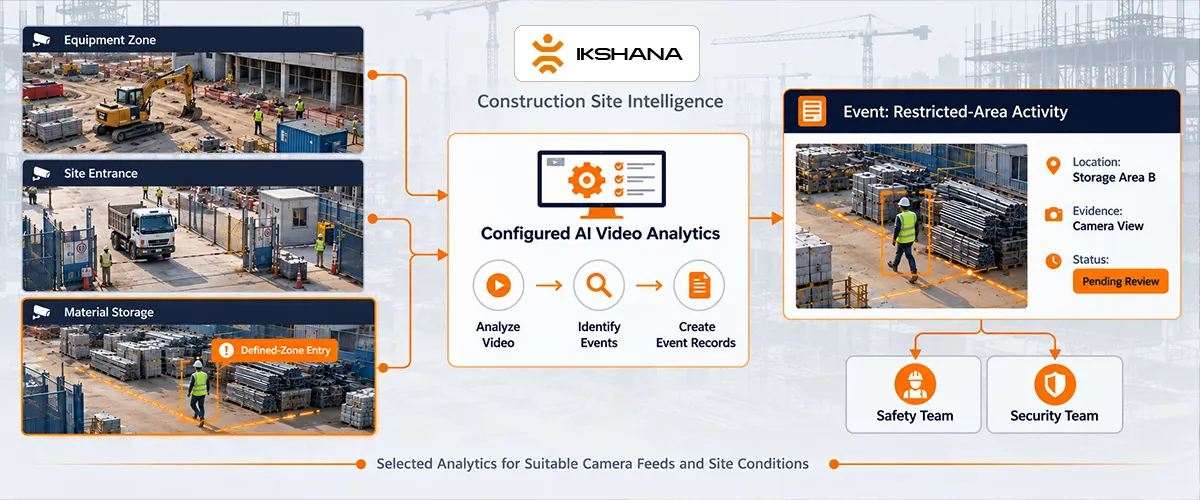
Intozi’s Ikshana Vision AI Platform applies AI video analytics to visual activity in operational environments. For suitable construction deployments, selected analytics can help identify configured safety and security events and provide additional visibility across monitored areas.
By connecting video monitoring with event-based intelligence, construction teams can focus on potential risks that require attention. Capabilities depend on the selected analytics, site conditions, and deployment configuration.
Why Construction Sites Are Moving Beyond Traditional Surveillance
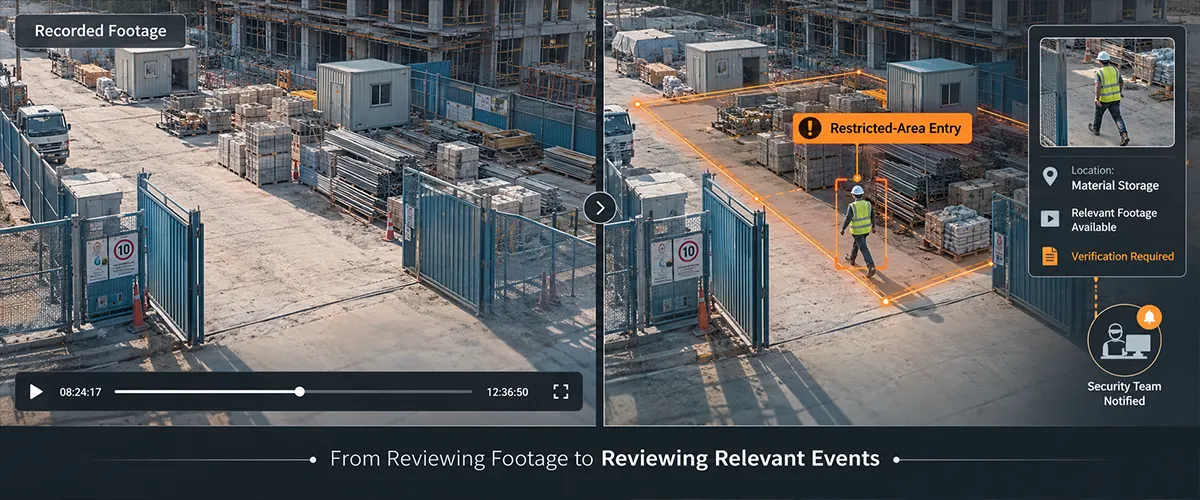
Construction site monitoring is evolving from passive recording toward identifying relevant events while work is underway. AI video analytics can help teams improve awareness of potential safety violations, restricted-area activity, and security incidents without relying exclusively on continuous manual observation.
For construction companies and infrastructure operators, the value lies in making video data more actionable. By combining AI-powered video intelligence with established site procedures, organizations can support more informed safety and security monitoring across active construction environments.
Intozi’s Ikshana helps construction teams apply AI video analytics to existing IP/CCTV infrastructure in suitable environments, turning site footage into alerts that support safety and security review.
Frequently Asked Questions (FAQs)
AI video analytics can identify configured visual events, such as entry into restricted zones or potential safety violations. Alerts help responsible personnel review incidents and take appropriate action alongside existing safety procedures and inspections.
A conventional surveillance system primarily records video for live viewing or later investigation. AI-based site monitoring adds analytics that can identify defined activities and generate alerts, helping teams locate relevant events more efficiently.
Depending on the deployment, AI surveillance can monitor designated entrances, perimeters, and restricted areas outside working hours. Its effectiveness depends on lighting, visibility, system configuration, and how alerts are handled.
It may be possible when existing video feeds are compatible with the analytics platform. Technical requirements, image quality, camera positioning, and connectivity should be assessed before deployment.
Depending on the selected capabilities, AI can identify events such as unauthorized entry, restricted-zone access, certain safety compliance violations, and unsafe interactions around monitored equipment. Not every risk is detectable through video, so AI should complement site inspections and professional safety management.
Upgrade Your Operations With Next-Generation AI Video Analytics
Intozi Tech Pvt Ltd
Unit no- 629, 644, 645 Tower B2, Spaze I-Tech Park, Sohna Road Sec 49, Gurgaon, Haryana-122018
MON-FRI 09:00 - 20:00, SAT 10:00 - 14:00