
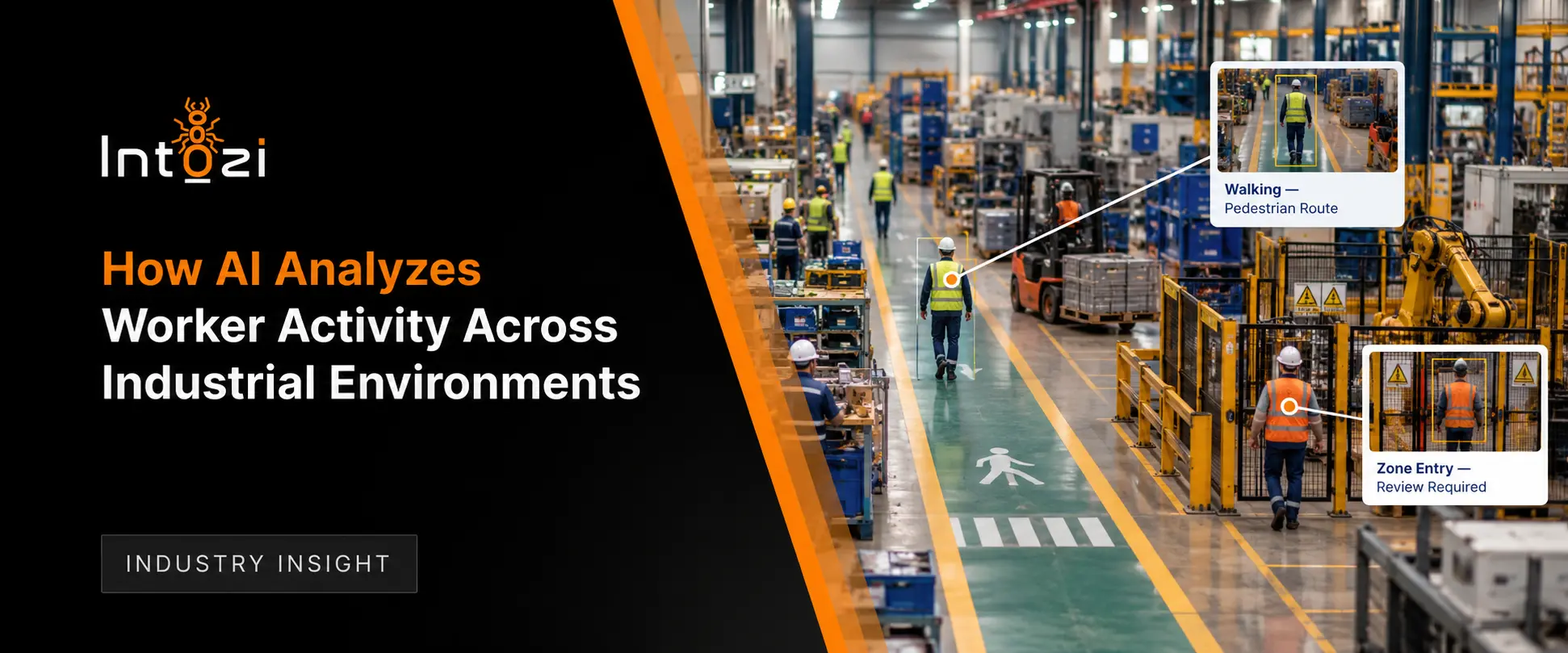
How AI Analyzes Worker Activity Across Industrial Environments
Industrial environments involve workers, machinery, production processes, and movement across different operational areas. Understanding how activity unfolds can help organizations identify safety concerns, review workplace practices, and improve operational visibility. However, manual observation alone may not provide a consistent view across large facilities.
AI video analytics can help analyze defined worker activities and flag events that require attention, giving industrial teams a more structured way to monitor selected activities and review potential risks.
How AI Worker Activity Recognition Works
AI worker activity recognition uses computer vision to identify visual patterns associated with specific movements or activities. Depending on the system’s capabilities, these may include walking, running, entering restricted areas, interacting with equipment, or performing defined workplace actions.
By analyzing video feeds, AI can identify configured events and generate alerts or records for review. This allows industrial teams to gain better visibility into selected activities without relying entirely on manual observation or reviewing footage after an incident.
What AI Can Identify About Workplace Activity
AI analytics can be configured to recognize specific visual events, depending on the deployment, camera positioning, and quality of the video feeds. These may include:
- Movement into designated restricted zones
- Walking or running in monitored areas
- Worker presence in defined operational spaces
- Specific interactions or activities around equipment
- Potential safety-related events, where supported
Industrial worker analytics and workplace behavior analytics can organize these observations into structured information that teams can review. This can help supervisors investigate recurring events, understand activity patterns across work zones, and identify situations that may require further attention.
However, video alone cannot explain a worker’s intentions, productivity, or reasons for performing an action. Detected events should always be interpreted in the context of the task and operating environment.
How Workforce Behavior Intelligence Supports Industrial Safety
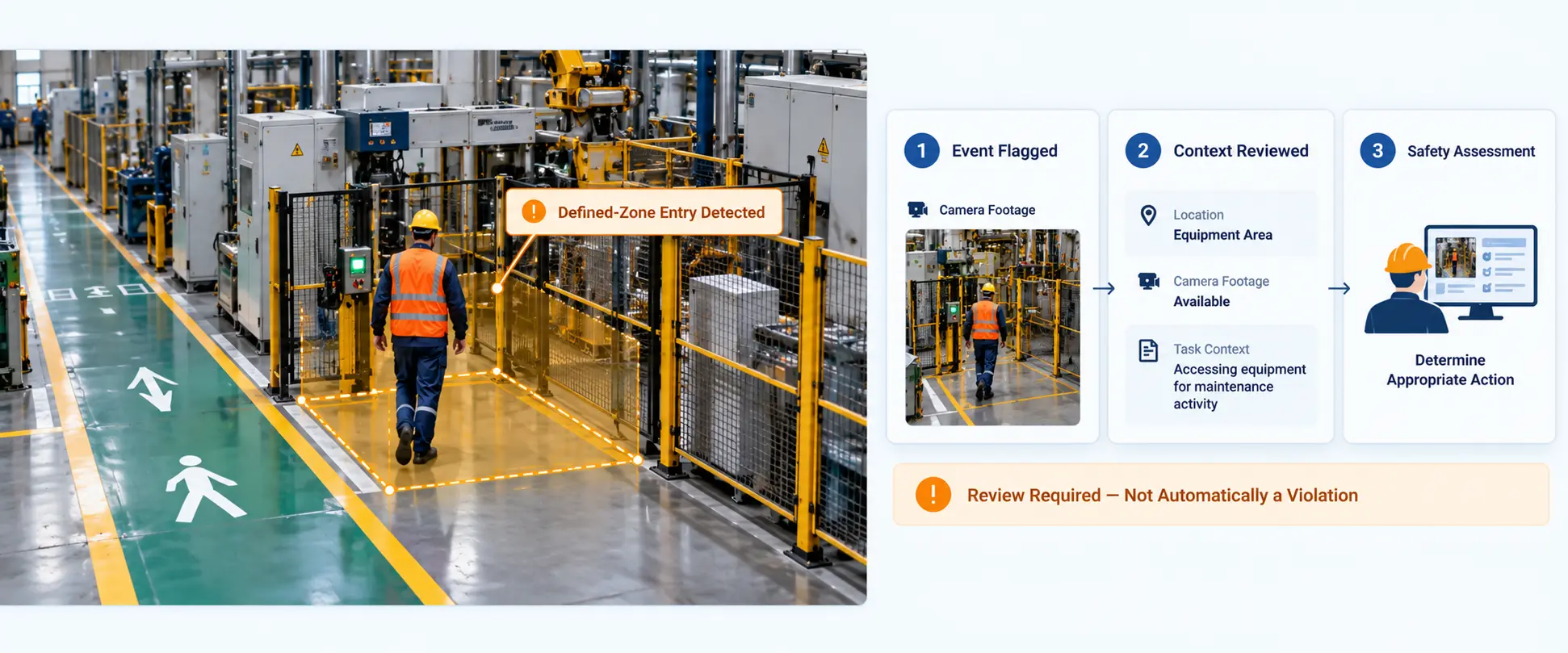
Worker safety depends on understanding the conditions in which tasks are performed. Restricted-area entry, unsafe movement around machinery, and other defined events may indicate situations that require timely attention.
Worker safety analytics and workforce behavior intelligence can help safety teams identify configured events and review relevant video footage. For example, AI can flag movement into hazardous zones or other specified safety conditions, where supported by the system.
When combined with established safety procedures, training, incident reporting, and risk assessments, these insights can help organizations investigate incidents and identify areas where additional controls may be needed. AI should support safety improvement rather than automatically classify every detected action as a violation.
The effectiveness of these capabilities depends on the AI model, site layout, camera visibility, lighting, and system configuration. Alerts should therefore be reviewed by qualified personnel before corrective action is taken.
How AI Workforce Analytics Supports Operational Decisions
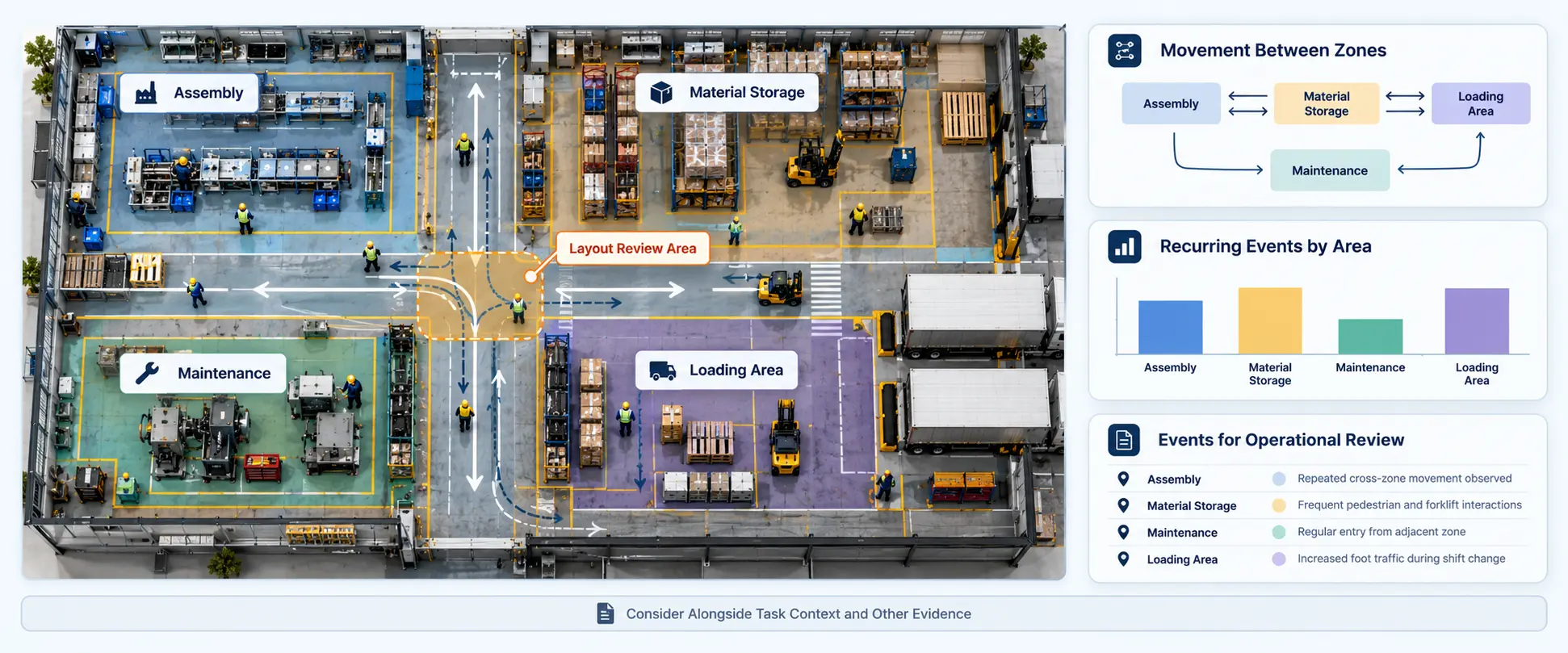
Worker activity data can provide additional context about how people move through different areas of a facility. Organizations may want to understand movement between work zones, activity around designated areas, or recurring events that require operational review.
AI workforce analytics can structure selected observations into event records and reports, where supported by the platform. These insights may help organizations review site layouts, assess safety controls, and identify opportunities to improve operational processes.
However, video analytics should not be treated as a complete measure of individual performance or productivity. Meaningful decisions require additional evidence and an understanding of the operational context.
Where AI Worker Activity Recognition Can Be Applied
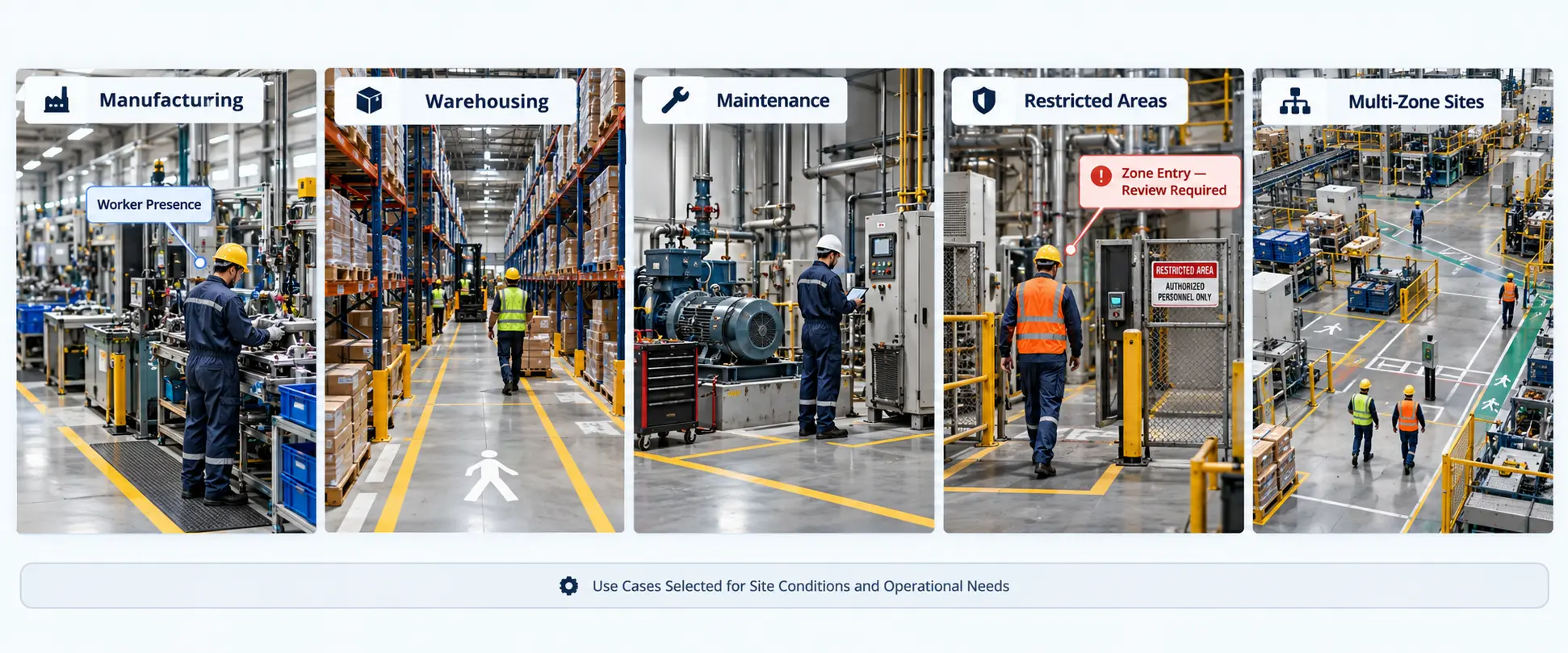
AI-based activity analysis may be useful across several industrial environments, including:
- Manufacturing plants and production lines
- Warehouses and logistics facilities
- Industrial equipment and maintenance zones
- Restricted operational areas
- Large facilities with multiple work zones
The appropriate use case depends on the environment, the activity being monitored, and the operational objective. Organizations should also consider privacy, transparency, access permissions, data retention, and the potential impact of monitoring on workers.
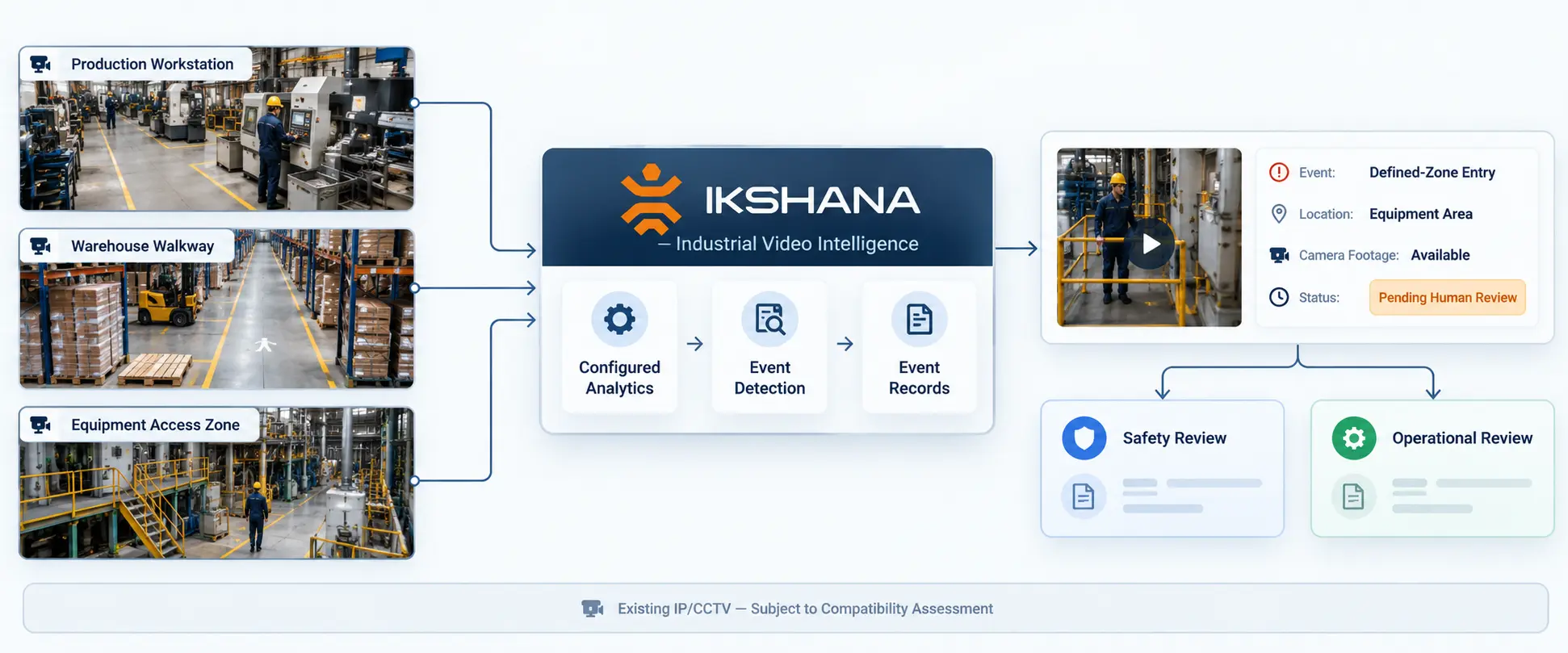
How Intozi and Ikshana Support Industrial Video Intelligence
Intozi’s Ikshana Vision AI Platform is an AI-powered video intelligence platform that adds analytics to existing IP/CCTV infrastructure. Depending on the selected analytics and deployment configuration, it can support the identification of defined activities and safety-related events across suitable monitored areas.
This provides organizations with another way to structure video-based observations for operational and safety review. The specific worker activity recognition capabilities depend on the use case, site conditions, and configured analytics.
By combining AI-generated event information with human review and appropriate privacy safeguards, industrial organizations can use video intelligence to improve visibility while supporting responsible workplace monitoring.
Frequently Asked Questions (FAQs)
AI workforce analytics uses technologies such as computer vision to analyze selected workplace activities and generate structured information. Depending on the system, this can include movement patterns, worker presence in designated areas, and defined safety-related events.
AI worker activity recognition analyzes video to identify visual patterns associated with configured actions or events. Its performance depends on the AI model, camera positioning, lighting, visibility, and the complexity of the environment.
Yes. It can support safety monitoring by flagging defined events for review, such as entry into restricted areas or other configured safety conditions. It should complement risk assessments, training, supervision, and established safety procedures.
No. Workforce analytics can focus on selected operational activities or safety events, while productivity assessment requires broader context and appropriate performance measures. Video analytics alone cannot reliably explain an individual’s intentions, effort, or overall productivity.
Companies should define the purpose of monitoring, select relevant use cases, assess system capabilities, and establish policies for privacy, transparency, access, and data retention. They should also ensure that AI-generated observations are reviewed in context before decisions are made.
Upgrade Your Operations With Next-Generation AI Video Analytics
Intozi Tech Pvt Ltd
Unit no- 629, 644, 645 Tower B2, Spaze I-Tech Park, Sohna Road Sec 49, Gurgaon, Haryana-122018
MON-FRI 09:00 - 20:00, SAT 10:00 - 14:00